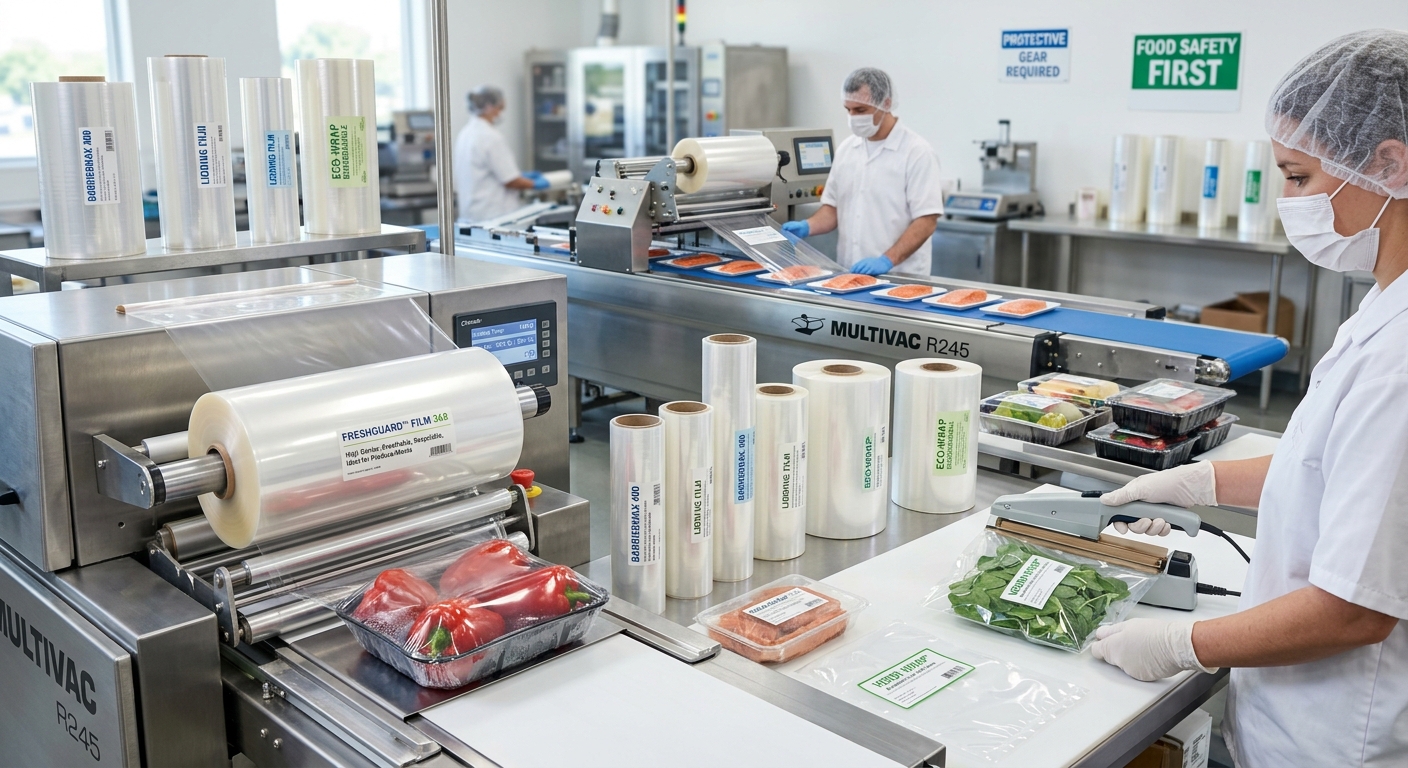
Hướng dẫn Cơ bản về Đóng gói Màng Bao bì Thực phẩm Linh hoạt: Xu hướng, Nguyên vật liệu, và tính bền vững
Khi nói đến bảo quản thực phẩm hiện đại, đóng gói linh hoạt màng bao bì thực phẩm đã hoàn toàn cách mạng hóa cách chúng ta lưu trữ, chuyên chở, và tiêu thụ những sản phẩm yêu thích của chúng ta. Từ miếng khoai tây chiên giòn đến độ tươi được hút chân không của miếng thịt bò nguyên chất, màng dẻo là những anh hùng thầm lặng của chuỗi cung ứng thực phẩm toàn cầu.
Nhưng chính xác những gì diễn ra trong quá trình chế tạo những chiếc máy siêu mỏng này, vật liệu hiệu suất cao? Và khi nhu cầu của người tiêu dùng chuyển sang các giải pháp thân thiện với môi trường, Ngành công nghiệp cân bằng việc kéo dài thời hạn sử dụng với trách nhiệm môi trường như thế nào? Hãy đi sâu vào khoa học, những lợi ích, và tương lai của bao bì thực phẩm linh hoạt.
Tại sao màng bao bì thực phẩm linh hoạt chiếm ưu thế trên thị trường
Đi bộ xuống bất kỳ lối đi nào của cửa hàng tạp hóa, và bạn sẽ nhanh chóng nhận ra rằng những chiếc lọ thủy tinh cứng và những chiếc lon thiếc nặng nề đang mất dần vị thế. Bao bì linh hoạt màng bao bì thực phẩm đã tiếp quản vì chúng mang lại sự kết hợp hiệu quả chưa từng có, sự bảo vệ, và xây dựng thương hiệu bất động sản.
Đây là lý do tại sao các nhà sản xuất cũng như người tiêu dùng đang thực hiện chuyển đổi:
- Bảo vệ rào cản vô song: Thực phẩm hư hỏng chủ yếu do tiếp xúc với oxy, độ ẩm, và tia cực tím. Phim linh hoạt tiên tiến được thiết kế với các lớp cực nhỏ hoạt động như một lá chắn không thể xuyên thủng, cắt giảm đáng kể chất thải thực phẩm.
- Hiệu quả tài nguyên: Cần ít năng lượng và nguyên liệu thô hơn đáng kể để sản xuất túi linh hoạt so với hộp đựng bằng nhựa hoặc thủy tinh cứng. Điều này trực tiếp dẫn đến lượng khí thải carbon thấp hơn trong quá trình sản xuất.
- Tiết kiệm chi phí hậu cần: Phim dẻo cực kỳ nhẹ và vận chuyển phẳng. Một chiếc xe tải chở các túi linh hoạt rỗng có thể chứa lượng hàng tương đương lên tới 25 xe tải chở lọ thủy tinh rỗng. Đó là sự giảm đáng kể lượng khí thải vận chuyển và chi phí nhiên liệu.
Giải mã cấu trúc của màng bao bì thực phẩm
Không phải tất cả các bộ phim đều được tạo ra như nhau. Trong thực tế, Miếng nhựa bọc phô mai tưởng chừng đơn giản đó lại có thể rất phức tạp, tấm nhiều lớp. Mỗi lớp phục vụ một nhiệm vụ riêng biệt, mục đích quan trọng.
1. Lớp ngoài (In & thẩm mỹ)
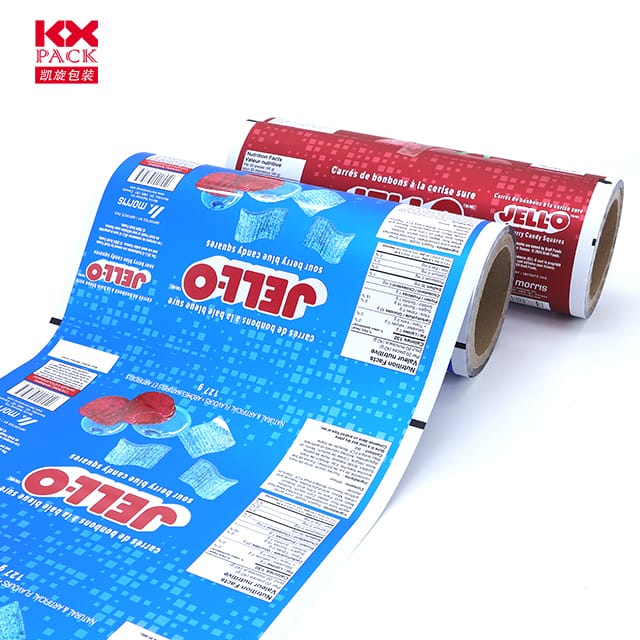
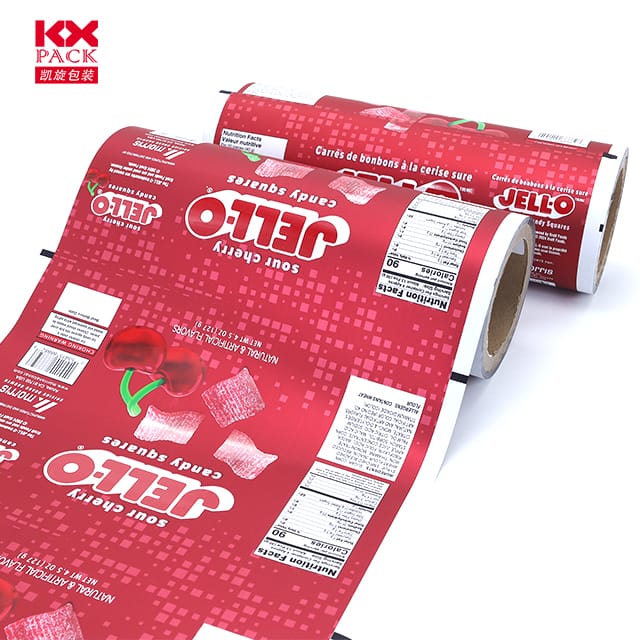
Thường được làm bằng vật liệu như THÚ CƯNG (Polyetylen Terephthalate) hoặc BOPP (Polypropylen định hướng biAx), lớp này cần chịu được nhiệt độ in cao và ứng suất cơ học. Đó là yếu tố mang lại cho bao bì vẻ ngoài bóng hoặc mờ và thương hiệu sống động..
2. Lớp rào cản cốt lõi (Sự bảo tồn)
Đây là trái tim của việc bảo quản thực phẩm. Vật liệu như EVOH (Rượu etylen vinyl) hoặc lá nhôm mỏng được kẹp ở giữa để chặn sự truyền oxy và hơi ẩm. Ngay cả một lớp mỏng như một phần tóc người cũng có thể kéo dài thời hạn sử dụng của sản phẩm từ vài ngày đến vài tháng.
3. Lớp keo bên trong (Chính trực)
Chạm trực tiếp vào thức ăn, lớp này—thường được làm bằng LDPE (Polyethylene mật độ thấp)—phải an toàn thực phẩm và có khả năng tan chảy và bịt kín dưới nhiệt độ và áp suất để tránh rò rỉ.
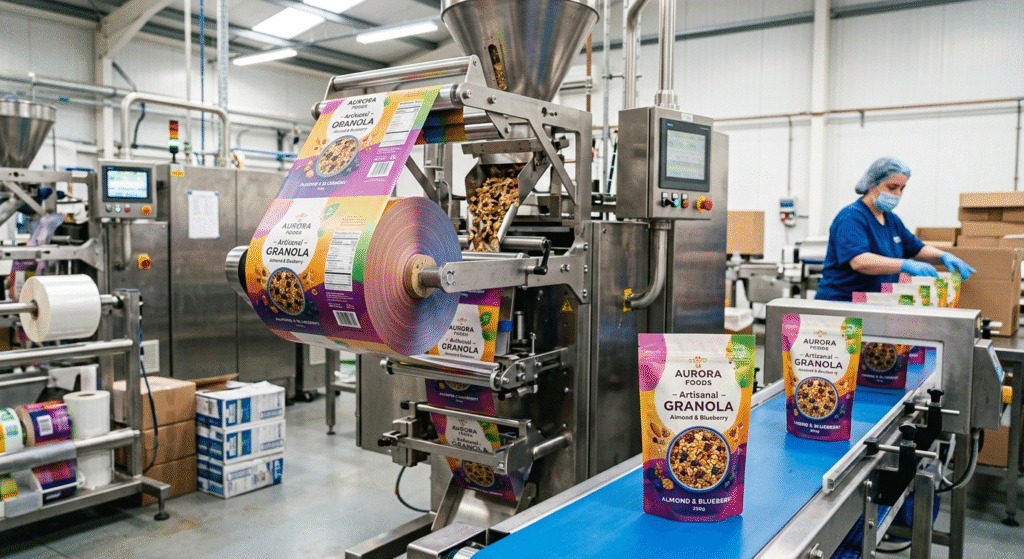
Xu hướng quan trọng định hình ngành bao bì linh hoạt
Phong cảnh của đóng gói màng bao bì thực phẩm linh hoạt đang phát triển với tốc độ chóng mặt, được thúc đẩy bởi những đột phá về công nghệ và bối cảnh pháp lý đang thay đổi.
Sự trỗi dậy của vật liệu đơn sắc
Về mặt lịch sử, màng nhiều lớp gần như không thể tái chế vì cơ sở phân loại không thể tách PET khỏi PE hoặc EVOH. Hôm nay, ngành công nghiệp đang chuyển hướng mạnh mẽ theo hướng cấu trúc đơn chất—thường là Polyetylen nguyên chất (Thể dục) hoặc Polypropylen (PP) pha trộn. Thông qua kỹ thuật polymer tiên tiến, Những màng vật liệu đơn này bắt chước đặc tính rào cản của nhựa nhiều lớp truyền thống trong khi vẫn hoàn toàn tương thích với các dòng tái chế tiêu chuẩn.
Giấy hóa có rào cản cao
Giấy có thể thay thế nhựa được không? Ở một số lĩnh vực, Đúng. Các chủ sở hữu thương hiệu đang thử nghiệm các rào cản linh hoạt trên giấy được phủ polyme phân tán gốc nước. Mặc dù chúng chưa phù hợp với khả năng bảo quản cực tốt của nhựa đối với thực phẩm ướt hoặc có độ nhạy cao, chúng hoàn hảo cho các mặt hàng khô như bánh kẹo và yến mạch.
Bao bì thông minh và năng động
Hãy tưởng tượng một tấm phim đổi màu khi thức ăn bên trong bắt đầu hư hỏng, hoặc màng hấp thụ tích cực khí ethylene để giữ trái cây tươi lâu hơn. Bao bì tích cực đang chuyển từ phòng thí nghiệm sang kệ bán lẻ, cung cấp cho người tiêu dùng dữ liệu về độ tươi theo thời gian thực và tích cực chống lãng phí thực phẩm.
Giải quyết vấn đề bền vững trong phòng
Hãy hoàn toàn thẳng thắn: cuộc khủng hoảng rác thải nhựa là mối quan tâm hàng đầu của mọi người. Trong khi đóng gói màng bao bì thực phẩm linh hoạt vượt trội trong việc giảm lãng phí thực phẩm (mà bản thân nó là tác nhân lớn gây ra khí nhà kính), quản lý cuối đời của họ về mặt lịch sử là một điểm yếu.
Tuy nhiên, câu chuyện đang thay đổi. CPG chính (Hàng tiêu dùng đóng gói) thương hiệu đã cam kết thực hiện 100% bao bì của họ có thể tái sử dụng, có thể tái chế, hoặc có thể phân hủy trong vòng thập kỷ. Điều này đã thúc đẩy sự đầu tư lớn vào:
- Tái chế sau tiêu dùng (PCR) Nội dung: Kết hợp nhựa tái chế vào màng tiếp xúc với thực phẩm thông qua tái chế hóa học tiên tiến.
- Phim phân hủy sinh học và có thể phân hủy: Sử dụng PLA (Axit polylactic) có nguồn gốc từ bột ngô hoặc PHA (Polyhydroxyalkanoat) được tổng hợp bởi vi sinh vật biển, cho phép bao bì phân hủy một cách tự nhiên mà không để lại hạt vi nhựa.
Chọn màng dẻo phù hợp cho sản phẩm thực phẩm của bạn
Nếu bạn là nhà sản xuất thực phẩm đang tìm cách tối ưu hóa bao bì của mình, không có giải pháp nào phù hợp cho tất cả. Bạn phải đánh giá các lỗ hổng cụ thể của sản phẩm:
| Danh mục món ăn | Lỗ hổng chính | Đặc điểm phim được đề xuất |
| Thịt đỏ tươi | Tiếp xúc với oxy (sự đổi màu) | Chân không có rào cản cao hoặc MAP (Bao bì khí quyển sửa đổi) phim |
| tiệm bánh & Bánh mỳ | Mất độ ẩm (ôi thiu) | Phim đục lỗ vĩ mô có khả năng chống ẩm cao |
| Đồ ăn nhẹ & Quả hạch | ôi thiu (oxy hóa chất béo) | Phim chống tia cực tím kim loại hoặc mờ đục |
| Thực phẩm đông lạnh | Đốt tủ đông & đâm thủng | Khả năng chống đâm thủng cao, PE tuân thủ nhiệt độ thấp |
Phần kết luận: Con đường linh hoạt phía trước
Thế giới của đóng gói màng bao bì thực phẩm linh hoạt là sự giao thoa hấp dẫn của khoa học vật liệu, bảo quản ẩm thực, và quản lý môi trường. Khi chúng ta nhìn về tương lai, mục tiêu rõ ràng: tạo ra nền kinh tế tuần hoàn trong đó bao bì hiệu suất cao bảo vệ thực phẩm của chúng ta một cách hoàn hảo, và sau đó chuyển tiếp liền mạch sang vòng đời tiếp theo mà không gây hại cho hành tinh.
Bằng cách cập nhật thông tin về những đổi mới về vật liệu và thay đổi kỳ vọng của người tiêu dùng, doanh nghiệp có thể chọn bao bì không chỉ bảo vệ lợi nhuận của mình mà còn bảo vệ thế giới chúng ta đang sống.
Doanh nghiệp của bạn đang phải đối mặt với những thách thức gì khi chuyển đổi sang bao bì linh hoạt bền vững? Hãy bắt đầu cuộc trò chuyện trong phần bình luận bên dưới!