Hogyan válasszuk ki a megfelelő egyedi kifolyótasakot folyékony élelmiszerek csomagolásához: Anyag & Barrier Guide
Minden évben, az italgyártók és a szószfeldolgozók több ezer dollárt veszítenek a termékromlás miatt, szállítási sérülés, és gyenge polcteljesítmény. A kiváltó ok ritkán maga a recept; ez általában helytelen rugalmas csomagolási specifikáció. Kiválasztása a Egyedi kifolyótasak számára Folyékony élelmiszer-csomagolás egyensúlyt igényel a mechanikai tartósság között, kémiai kompatibilitás, és az eltarthatósági követelmények.
Ha merev üvegpalackról vagy merev HDPE kancsóról hajlékony kiöntős tasakra vált át, ez a műszaki útmutató felvázolja a megfelelő laminált szerkezetek kiválasztását, gátrétegek, és kifolyó konfigurációk folyékony élelmiszerekhez.
Miért számít az anyagszerkezet a folyékony élelmiszerek csomagolásánál?
Ellentétben a száraz porokkal vagy a szilárd snackekkel, A folyadékok folyamatos hidrosztatikus nyomást fejtenek ki a tasak varratjaira. Továbbá, A folyékony termékek nagyon érzékenyek az oxigén áthatolására, nedvességvándorlás, és fényexpozíció. A nem megfelelő anyagválasztás delaminációhoz vezethet, szétrepedt varratok, vagy oxidáció okozta mellékíz.
Nagy teljesítményű Egyedi kifolyótasak többrétegű kompozit szerkezetet használ. Minden réteg külön funkcionális célt szolgál:
- Külső réteg (Nyomtathatóság & Szakítószilárdság): Jellemzően PET (Polietilén -tereftalát) vagy BOPA (Nejlon). A PET nagy tisztaságot és hőmérsékletstabilitást biztosít a mélynyomtatás során, míg a BOPA rendkívüli átszúrásállóságot biztosít.
- Középső réteg (Akadályvédelem): Pajzsként működik az oxigén átadása ellen (OTR) és a vízgőz áteresztése (WVTR).
- Belső réteg (Hőszigetelés & Termék kapcsolattartó): Közvetlen élelmiszerrel érintkező réteg, általában módosított LLDPE (Lineáris alacsony sűrűségű polietilén) vagy CPP (Öntött polipropilén). Ennek a rétegnek ellenállnia kell a savas vagy olajos tartalomnak anélkül, hogy leromlana.
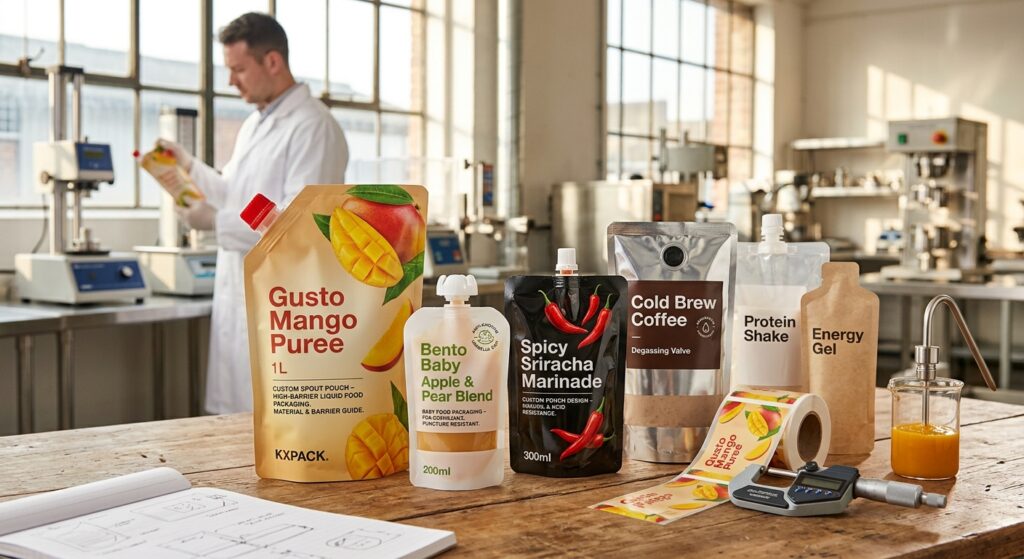
Anyagkombinációk folyékony élelmiszer-kategóriákhoz
Különböző Folyékony élelmiszer-csomagolás Az alkalmazások testreszabott filmszerkezeteket igényelnek. A nem megfelelő kombináció megválasztása gyakran lerövidíti az eltarthatóságot vagy a csomagolás meghibásodását eredményezi a hőkezelés során.
| Étel/ital kategória | Közös termékek | Ajánlott laminált szerkezet | Kulcsteljesítmény-funkció |
| Magas savtartalmú & Olajos folyadékok | Salátaöntetek, forró szószok, pácok | KEDVENC / TEREMT / Llde (Saválló fokozat) | Magas olajállóság; megakadályozza a rétegek leválását |
| Oxigénérzékeny folyadékok | Gyümölcslevek, bébiétel pürék, tejtermékek keverékei | KEDVENC / AL / TEREMT / Llde | Nulla OTR/WVTR; teljes fényblokád |
| Hot-Fill alkalmazások | Meleg italok, levesek, feldolgozott húslevesek | KEDVENC / TEREMT / RCPP | 85°C-95°C töltési hőmérsékletig ellenáll |
| Visszavágás / Magas hőmérsékletű sterilizálás | Eltartható ételek, kész levesek | KEDVENC / AL / TEREMT / RCPP | Nyomás alatt 121°C-135°C-ig hőálló |
1. Fólia alapú laminátumok (Végső védelem)
Eltartható gyümölcslevek vagy tejtermékek kezelésekor, egy réteg alumínium fólia (AL) továbbra is az aranystandard. Fizikai akadályt hoz létre nullához közeli OTR és WVTR értékkel. Viszont, a fólia átlátszatlanná teszi a tasakot, és nincs rugalmas repedésállósága, ha komoly szállítási igénybevételnek van kitéve, ezért egy Nylon (TEREMT) A fólia mellé párnaréteg kötelező.
2. High-Barrier átlátszó laminátumok (Termék láthatósága)
Ha marketingstratégiája a folyékony termék természetes színének megjelenítésén alapul, átlátszó, magas védőfóliákra van szükség. Olyan anyagok, mint az EVOH (Etilén vinil -alkohol) vagy AlOx/SiOx bevonatú PET magas szintű oxigénvédelmet biztosít, miközben megőrzi a termék teljes átlátszóságát. Vegye figyelembe, hogy az EVOH nedvességre érzékeny, és a nedvességálló PE rétegek közé kell helyezni, hogy megőrizze a gát integritását..
Méretezés, Kifolyócső típusai, és Fitt Selection
A Egyedi kifolyótasak két komponensből áll: a rugalmas laminált test és a merev fröccsöntött kifolyószerelvény. A megfelelő kifolyó átmérőjének a termék viszkozitásához való igazítása kulcsfontosságú a pozitív fogyasztói élmény érdekében.
- Viszkozitás illesztés:
- Alacsony viszkozitás (Víz, Gyümölcslevek, Energiaitalok): 8.5mm és 10 mm közötti kifolyócső belső átmérője.
- Közepes viszkozitású (Méz, Ketchup, Joghurt): 13mm és 15 mm közötti kifolyócső belső átmérője.
- Magas viszkozitás/pép (Püré, Nehéz szószok, Részecske levesek): 16mm-től 33 mm-ig terjedő kifolyócső belső átmérője.
- Szabotázs-ellenőrző sapkák: Kiskereskedelem számára Folyékony élelmiszer-csomagolás, A termék sértetlenségének ellenőrzésére fogyasztás előtt törhető gyűrűkkel ellátott biztonsági sapkák szükségesek.
- Fulladásgátló sapkák: Bébiétel alkalmazásokhoz, nagy átmérőjű “nyelésbiztos” sapkák (mint például az esernyő vagy a fa alakú sapkák) ipari szabványok, amelyek megfelelnek a gyermekbiztonsági előírásoknak.
Gyártási protokollok: Szivárgások és leválás megelőzése
A folyékony rugalmas csomagolás nem hagy teret a gyártási hibáknak. A beszerzéskor a Egyedi kifolyótasak, működjön együtt az OEM beszállítójával a következő gyártásellenőrzések megerősítése érdekében:
1. A hőtömítés integritása és a szerelvény beillesztése
Az a csomópont, ahol a merev kifolyó és a rugalmas fólia találkozik, a leggyakoribb meghibásodási pont. A gyártóknak speciális, kétlépcsős beszúrószerszámokat kell alkalmazniuk. A filmet előmelegítjük, precíz hőnyomással lezárva a kifolyószárny körül, majd azonnal lehűtjük, hogy a polimer szerkezet a helyén rögzüljön hőterheléses törés nélkül.
2. Oldószermentes laminálás vs. Oldószer alapú laminálás
Élelmiszeripari alkalmazásokhoz, oldószermentes laminálás előnyös. Kiküszöböli annak a kockázatát, hogy a maradék oldószer a folyékony élelmiszerbe kerüljön, a kellemetlen szagok vagy a kémiai megfelelőség meghibásodásának megelőzése az FDA vagy az EU élelmiszerekkel való érintkezésére vonatkozó előírásai szerint.
3. Burst teszt és cseppteszt
A tömeggyártás előtt, a tasakokat szigorú vizsgálatnak kell alávetni:
- Burst Test: Levegőnyomást fecskendeznek be a tasakba annak ellenőrzésére, hogy a tömítések képesek kezelni a belső nyomáscsúcsokat szállítás vagy raktározás során..
- Csepp teszt: A folyadékkal töltött tasakok leejtik a magasságtól kezdve 1.2 hogy 1.8 méter több szögben, hogy biztosítsa a varrás rugalmasságát és a szúrásállóságot.
Átállás a rugalmas csomagolási hatékonyságra
Frissíti a Folyékony élelmiszer-csomagolás A flexibilis kiöntős tasakokig terjedő vonal akár akár az üres csomagolások raktári tárolási követelményeit is csökkenti 85% merev konténerekhez képest. Jelentősen csökkenti a bejövő szállítási költségeket is a kisebb csomagsúly miatt.
A zökkenőmentes átmenet biztosítása érdekében, határozza meg a töltési hőmérsékletet (hideg töltelék, forró töltet, vagy visszavág), értékelje terméke kémiai tulajdonságait (sav és olajtartalom), és fizikai minta prototípus elkészítését kérheti a valós eltarthatósági és stressztesztek elvégzéséhez.