Révolutionner la durabilité et l'efficacité: La puissance du film de rouleau d'emballage (4)
Film de rouleau d'emballage
In today’s fast-paced retail and logistics landscape, packaging roll film se présente comme un héros méconnu, Sauvegarder tranquillement les produits des planchers d'usine aux portes des consommateurs. Encore, au-delà de son rôle de barrière protectrice, this versatile material is undergoing a transformative shift towarddurabilité, innovation, et conception intelligente. Let’s explore how modern roll film solutions are reshaping industries while minimizing environmental footprints.
1. The Evolution of Roll Film: From Single-Use to Circular Solutions
Traditional plastic roll films, tout en étant efficace, have long faced criticism for their contribution to plastic pollution. Cependant, advancements in material science are challenging this narrative. Manufacturers now prioritizerecyclable, compostable, and bio-based alternatives:
- Films biodégradables: Made from corn starch, canne à sucre, ou des algues, these films decompose in industrial composting facilities within 180 journées.
- Recyclé post-consommation (PCR) Contenu: Des marques comme Novamont are blending recycled plastics into new films, réduire la dépendance aux matériaux vierges.
- Systèmes réutilisables: Some companies offer returnable roll film programs, where customers send back used film for refurbishment, creating a closed-loop cycle.
Par exemple, EcoFlex Films has partnered with e-commerce giants to trial reusable mailers made from durable, recyclable polyethylene. These mailers can withstand 50+ cycles, slashing packaging waste by 80%.
2. Smart Engineering: Léger, Durable, et personnalisable
Modern roll film isn’t just greener—it’s smarter. Innovations danstechnologie de coextrusion allow manufacturers to layer materials, combining strength with sustainability:
- Down-Gauging: Films plus fins (aussi bas que 8 microns) maintain performance while reducing material use by 30%.
- Améliorations des barrières: Anti-dent, antistatique, or UV-resistant coatings extend product shelf life without bulky secondary packaging.
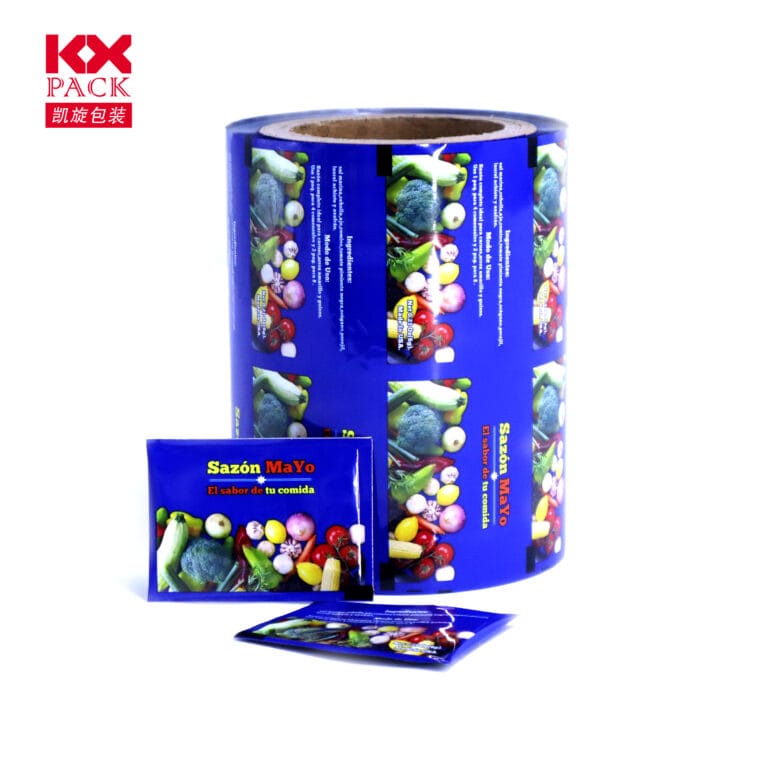
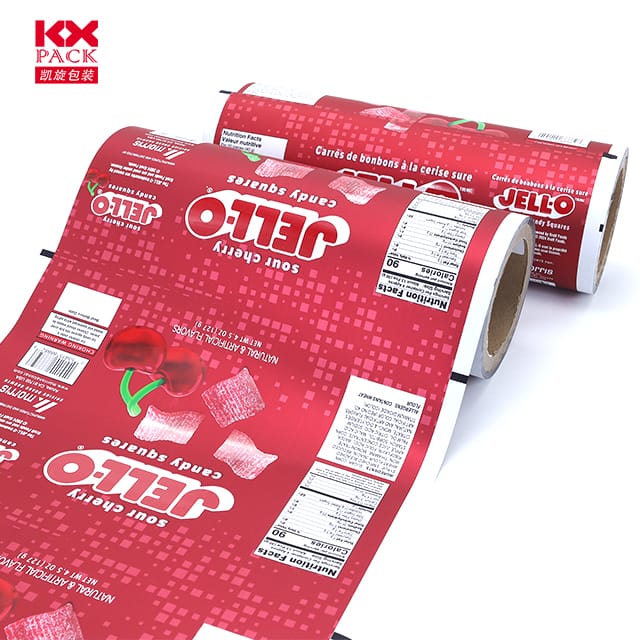
- Print-Ready Surfaces: High-definition graphics on film eliminate the need for labels, streamlining production and reducing waste.
A case in point: Berry Global« “EcoGuard” film uses a nano-layered structure to block oxygen and moisture, preserving freshness for perishables like coffee or snacks. This reduces food waste—a major contributor to greenhouse gas emissions—while cutting packaging volume.(Film de rouleau d'emballage)
3. Applications spécifiques à l'industrie: Tailoring Solutions for Every Need
Packaging roll film isn’t one-size-fits-all. Different sectors demand tailored solutions:
- Nourriture & Boisson: Stretch films with antimicrobial properties keep meats, fromages, and produce safer. Vacuum-sealed rolls extend the lifespan of frozen goods.(Film de rouleau d'emballage)
- Commerce électronique: Cushion films with air pockets or honeycomb structures protect fragile items during transit, replacing bulky foam or paper.
- Industriel: Heavy-duty shrink films secure pallets, with reinforced seams and UV resistance for outdoor storage.
Par exemple, Air scellé« “ReNew” stretch film uses 25% less plastic than conventional options while offering superior load containment, saving fuel in transportation.
4. The Circular Economy Imperative: Collaboration tout au long de la chaîne d'approvisionnement
Sustainability in roll film isn’t achieved in isolation. It requiresindustry-wide collaboration:
- Recyclage chimique: Breaking down mixed plastics into raw materials for new films.
- Conception pour la recyclabilité: Standardizing film types (Par exemple, mono-material PE) to simplify recycling processes.
- Éducation des consommateurs: Des étiquettes comme “How2Recycle” guide proper disposal, boosting recycling rates.
LeFondation Ellen MacArthur’s New Plastics Economy initiative pushes for 100% réutilisable, recyclable, or compostable packaging by 2025. Des marques commeUnlever etSe nicher are already piloting recyclable stand-up pouches made from roll film, proving large-scale change is possible.
5. L'avenir: Zero-Waste Goals and Beyond
La prochaine frontière? Films comestibles, algae-based coatings, and AI-driven packaging optimization. Imaginez un monde où:
- Fruit stickers dissolve in water, leaving no trace.
- Films sense spoilage and change color, réduire le gaspillage alimentaire.
- 3D-printed roll film adapts in real-time to product dimensions, minimizing excess.
Des startups commePaspla are already experimenting with seaweed-based sachets that decompose in weeks. Entre-temps, Amazone« “Frustration-Free Packaging” program uses machine learning to design right-sized roll film boxes, cutting material use by 33%.
Réflexions finales: Un emballage qui a un but
Packaging roll film is no longer just a commodity—it’s a canvas for innovation. By embracing circularity, smart engineering, and cross-industry partnerships, we can turn this humble material into a force for positive change.
What’s your vision for the future of sustainable packaging? Share your ideas below—let’s inspire the next breakthrough! 🌍📦
Mots clés: packaging roll film, emballage durable, biodegradable film, économie circulaire, matériaux écologiques