نحوه انتخاب کیسه دهانه سفارشی مناسب برای بسته بندی مواد غذایی مایع: مواد & راهنمای مانع
هر سال, تولید کنندگان نوشیدنی و تولیدکنندگان سس هزاران دلار به دلیل تخریب محصول از دست می دهند, خسارت حمل و نقل, و عملکرد ضعیف قفسه. علت اصلی به ندرت خود دستور غذا است; معمولاً مشخصات بسته بندی انعطاف پذیر نادرست است. Selecting a Custom Spout Pouch for بسته بندی مواد غذایی مایع requires a balance between mechanical durability, سازگاری شیمیایی, and shelf-life requirements.
If you are transitioning from rigid glass bottles or rigid HDPE jugs to flexible spouted pouches, this engineering guide outlines how to select the proper laminate structures, barrier layers, and spout configurations for liquid foods.
Why Material Structure Matters for Liquid Food Packaging
Unlike dry powders or solid snacks, liquids exert continuous hydrostatic pressure against pouch seams. علاوه بر این, liquid products are highly sensitive to oxygen permeation, moisture migration, and light exposure. An improper material selection can lead to delamination, burst seams, or off-flavoring caused by oxidation.
A high-performance Custom Spout Pouch utilizes a multi-layer composite structure. Each layer serves a distinct functional purpose:
- لایه بیرونی (قابلیت چاپ & استحکام کششی): Typically PET (پلی اتیلن) or BOPA (نایلون). PET offers high clarity and temperature stability during gravure printing, while BOPA provides extreme puncture resistance.
- لایه میانی (حفاظت از موانع): Acts as a shield against oxygen transmission (OTR) and water vapor transmission (WVTR).
- لایه داخلی (Heat Sealing & Product Contact): Direct food-contact layer, usually modified LLDPE (پلی اتیلن خطی با چگالی پایین) or CPP (پلی پروپیلن بازیگران). This layer must withstand acidic or oily contents without degrading.
Material Combinations for Liquid Food Categories
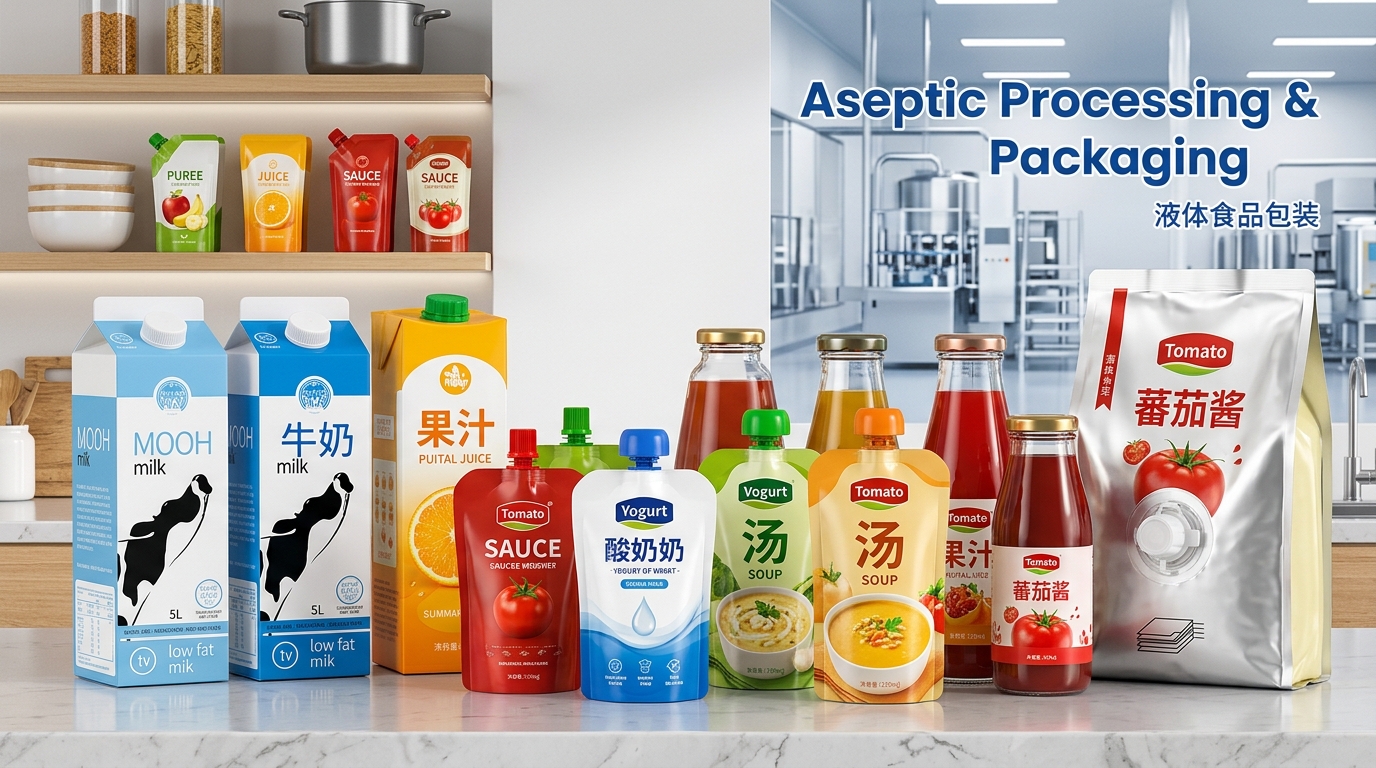
Different بسته بندی مواد غذایی مایع applications require tailored film structures. Choosing the wrong combination often results in shortened shelf life or packaging failure during thermal processing.
| Food/Beverage Category | Common Products | Recommended Laminate Structure | Key Performance Feature |
| High-Acid & Oily Liquids | Salad dressings, hot sauces, marinades | PET / ایجاد کنید / LLDPE (Acid-Resistant Grade) | High oil resistance; prevents layer delamination |
| Oxygen-Sensitive Liquids | Fruit juices, baby food purees, dairy blends | PET / AL / ایجاد کنید / LLDPE | Zero OTR/WVTR; complete light blockade |
| Hot-Fill Applications | Warm beverages, سوپ ها, processed broths | PET / ایجاد کنید / RCPP | Withstands filling temperatures up to 85°C–95°C |
| Retort / High-Temp Sterilization | Shelf-stable meals, ready-to-drink soups | PET / AL / ایجاد کنید / RCPP | Heat resistant up to 121°C–135°C under pressure |
1. Foil-Based Laminates (Ultimate Protection)
When dealing with shelf-stable juices or dairy products, a layer of Aluminum Foil (AL) remains the gold standard. It creates a physical barrier with an OTR and WVTR near zero. با این حال, foil renders the pouch opaque and lacks flex-crack resistance if subjected to severe transportation stress, which is why a Nylon (ایجاد کنید) cushion layer is mandatory alongside foil.
2. High-Barrier Clear Laminates (Product Visibility)
If your marketing strategy relies on showing the natural color of your liquid product, clear high-barrier films are necessary. Materials like EVOH (اتیلن وینیل الکل) or AlOx/SiOx-coated PET offer high oxygen protection while maintaining full product transparency. Note that EVOH is moisture-sensitive and must be sandwiched between moisture-proof PE layers to maintain its barrier integrity.
سایز بندی, Spout Types, and Fitment Selection
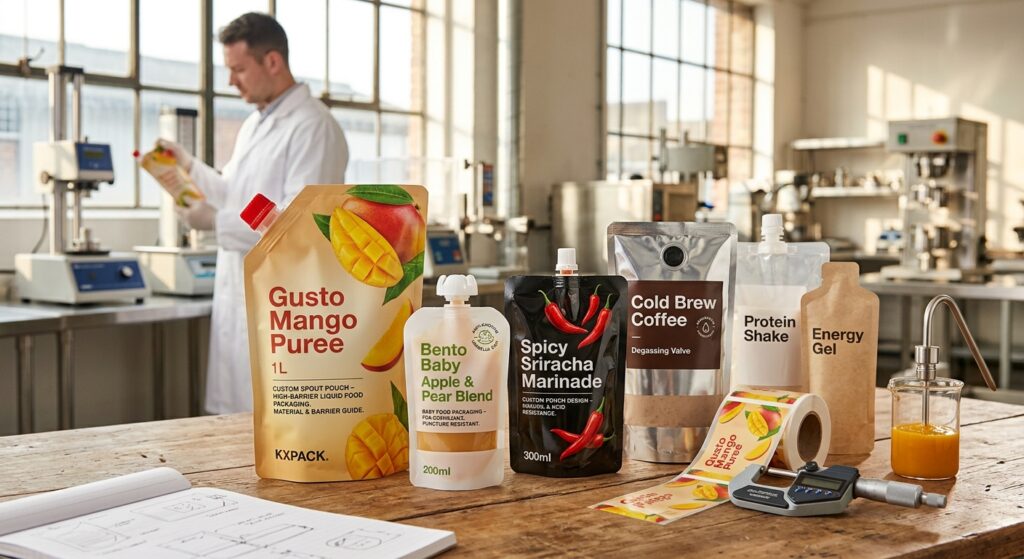
الف Custom Spout Pouch consists of two components: the flexible laminate body and the rigid injection-molded spout fitment. Matching the right spout diameter to your product viscosity is crucial for a positive consumer experience.
- Viscosity Matching:
- Low Viscosity (Water, Juices, Energy Drinks): 8.5mm to 10mm spout internal diameter.
- Medium Viscosity (Honey, Ketchup, ماست): 13mm to 15mm spout internal diameter.
- High Viscosity/Pulp (Purees, Heavy Sauces, Particulate Soups): 16mm to 33mm spout internal diameter.
- Tamper-Evident Caps: For retail بسته بندی مواد غذایی مایع, safety caps with breakable rings are required to confirm product integrity before consumption.
- Anti-Choking Caps: For baby food applications, large-diameter “swallow-proof” caps (such as umbrella or tree-shaped caps) are industry standard to comply with child safety regulations.
Manufacturing Protocols: Preventing Leaks and Delamination
Liquid flexible packaging leaves no room for manufacturing error. When sourcing a Custom Spout Pouch, work with your OEM supplier to confirm the following production controls:
1. Heat Seal Integrity and Fitment Insertion
The junction where the rigid spout meets the flexible film is the most common point of failure. Manufacturers must utilize specialized dual-stage insertion tooling. The film is pre-heated, sealed around the spout wing using precise thermal pressure, and then immediately cooled to lock the polymer structure in place without thermal stress fractures.
2. Solvent-Free Lamination vs. Solvent-Based Lamination
For food applications, solvent-free lamination is preferred. It eliminates the risk of residual solvent migration into the liquid food, preventing off-odors or chemical compliance failures under FDA or EU food contact regulations.
3. Burst Testing and Drop Testing
Before mass production, pouches must undergo rigorous testing:
- Burst Test: Air pressure is injected into the pouch to verify that the seals can handle internal pressure spikes during transport or warehousing stacking.
- Drop Test: Liquid-filled pouches are dropped from heights ranging from 1.2 به 1.8 meters at multiple angles to ensure seam elasticity and puncture resistance.
Transitioning to Flexible Packaging Efficiency
Upgrading your بسته بندی مواد غذایی مایع line to flexible spouted pouches reduces warehouse storage requirements for empty packaging by up to 85% compared to rigid containers. It also significantly cuts inbound shipping costs due to reduced package weight.
To ensure a seamless transition, determine your filling temperature (cold fill, hot fill, or retort), assess your product’s chemical properties (acidity and oil content), and request physical sample prototyping to conduct real-world shelf-life and stress testing.