Food Safety Packaging: Why FDA Compliant Packaging Matters for Your Brand
Navigating the world of commercial food manufacturing can feel like walking through a minefield. Between sourcing quality ingredients, perfecting recipes, and managing supply chains, it is easy to let packaging slip into the background as an afterthought. Však, bezpečnostní obaly potravin is quite literally the armor that protects your product, your consumers, a váš konečný výsledek. If you are selling consumable goods in the United States, utilizing FDA Compliant Packaging is not just a nice-to-have recommendation—it is a strict legal requirement and a critical pillar of consumer trust.
Whether you are launching a new line of organic snacks, scaling a beverage startup, or redesigning containers for established frozen meals, understanding how the U.S. Food and Drug Administration regulates materials that touch food can save you from catastrophic recalls and steep fines. Let’s break down everything you need to know about navigating these regulations without losing your sanity.
What Actually Makes Packaging “FDA Compliant”?
When people hear the term FDA compliant packaging, they often assume the government tests and approves every single box, pouch, or bottle on the market. Ve skutečnosti, the FDA does not test or pre-approve packaging materials. Místo toho, they establish rigorous safety regulations that manufacturers and brand owners must legally follow.
Under the Federal Food, Drug, and Cosmetic Act (FD&C Act), food packaging is officially classified as a “food additive.” Proč? Because chemicals and substances from the packaging can—and often do—migrate into the food or beverage it holds. This phenomenon is known as chemical migration.
To prevent harmful substances from contaminating our food supply, the FDA regulates food-contact substances under Title 21 of the Code of Federal Regulations (CFR). This massive body of rules dictates:
- Which polymers, colorants, and plasticizers are legally safe to use.
- The maximum allowable limits of specific chemical substances that can transfer into food.
- Specific testing methodologies required to prove that a material won’t leach toxins, especially when exposed to heat, fat, or acid.
If your supplier tells you their material is “FDA compliant,” you need to ask for documentation—specifically, A Letter of Guarantee or compliance certificates verifying that the specific formulation meets the CFR standards for your exact application.
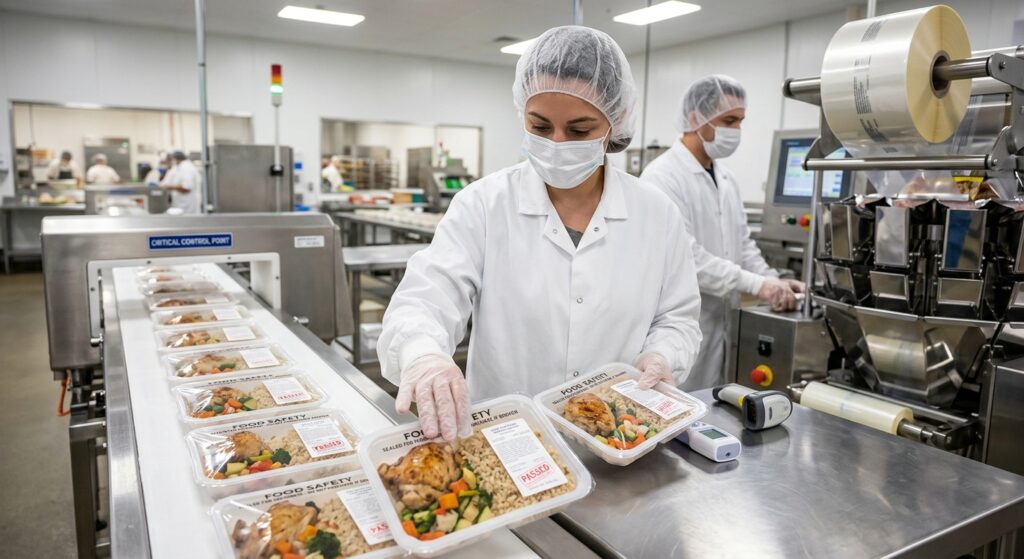
The Hidden Risks of Ignoring Food Packaging Regulations(Food Safety Packaging)
Cutting corners on food packaging might save a few pennies per unit upfront, but the long-term costs of non-compliance are devastating. Let’s look at what happens when brands fail to prioritize safe, regulated materials.
1. Chemical Migration and Health Hazards
Different foods react differently with packaging. High-acid foods like tomato sauce, high-fat foods like cheese or oils, and hot liquids can accelerate the breakdown of substandard packaging materials. When phthalates, těžkých kovů, or untested printing inks leach into food, they pose direct health risks to consumers, ranging from endocrine disruption to chronic toxicity.
2. Costly Product Recalls
A mandatory or voluntary product recall is every founder’s worst nightmare. If the FDA discovers that your food product has been contaminated by illegal packaging materials, you will be forced to pull every unit off store shelves. Between logistics, public relations management, disposal fees, and lost revenue, a single recall can easily bankrupt a growing business.
3. Irreparable Brand Damage
Consumers today are hyper-aware of what goes into and onto their food. Modern shoppers read ingredient labels, scrutinize supply chains, and quickly abandon brands caught up in safety scandals. Once customer trust is broken, winning it back is an uphill battle that requires massive marketing spend and transparency.
Key Material Considerations for Safe Food Containers(FDA compliant packaging)
Choosing the right material requires balancing product shelf life, estetická přitažlivost, cíle udržitelnosti, and strict regulatory compliance. Here is how standard materials stack up:
- Plastics (PET, HDPE, PP): Plastics are versatile and lightweight, but they are also chemically complex. Recycled plastics (PCR) face extra scrutiny under FDA guidelines to ensure that contaminants from previous cycles are completely stripped away during processing.
- Paper and Paperboard: Great for dry goods, but untreated paper absorbs moisture and grease. To prevent this, paper packaging usually relies on linings or coatings (like PLA or PE). These coatings must be individually certified as safe for food contact.
- Metals (Aluminum and Steel): Widely used for canned goods and beverages, metals require specialized interior lacquers or coatings. If the metal interacts directly with acidic food contents, it can corrode or leach metallic tastes into the product.
How to Verify Your Supply Chain
You cannot simply take a supplier’s word at face value. Protecting your business requires proactive due diligence across your entire packaging supply chain.
- Request Migration Test Reports: Ask your packaging supplier for overall and specific migration test data performed by accredited third-party laboratories.
- Understand End-Use Conditions: A material that is safe for dry cereal at room temperature might fail miserably when used for hot-fill coffee or microwave-ready meals. Always match the material’s specifications to your actual product lifecycle.
- Audit Your Suppliers: Know who manufactures your packaging, where the raw materials originate, and whether they maintain consistent quality control standards batch after batch.
Závěrečné myšlenky
Konec konců, bezpečnostní obaly potravin is far more than an operational checkbox or a legal hurdle. It is a fundamental commitment to the health of your customers and the integrity of your brand. By investing time, zdroje, and care into sourcing genuine FDA Compliant Packaging, you safeguard your business against legal liabilities while building a reputation for uncompromising quality.
When your customers open your product, the only thing they should experience is the great taste inside—never the container it came in. Prioritize compliance early, vet your partners thoroughly, and build a brand foundation designed to last.